

If SG&A is the only operating expense, the operating profit margin could technically be used as the driver of the projection. However, directly projecting EBIT is seldom done in practice and is generally not recommended, especially for more complex models. Imagine a company with $3 million in SG&A and $15 million in total revenue. We’d get the SG&A ratio of 20%, which means that every dollar of revenue gives $0.20 on SG&A expenses.
Balancing SG&A with Business Growth
Subtracting SG&A from gross profit gives you operating income, which shows how profitable your core operations are before interest and taxes. Cost of Goods Sold, or COGS, refers to the direct costs sg&a meaning of manufacturing a product or providing a service. SG&A includes all other non-production costs, such as marketing and administrative costs.

What’s the difference between SG&A and operating expenses?
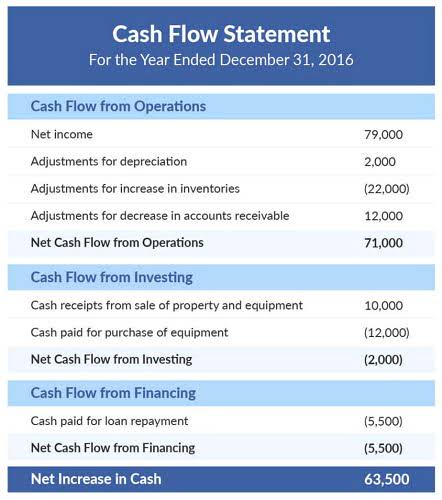
For example, let’s say that we have a company with $6 million in SG&A and $24 million in total revenue. From here, you can divide EBIT by revenue to calculate the operating margin. For example, if SG&A rises significantly but sales do not, the business will become less profitable. If SG&A goes down, while sales rise, the business will become more profitable. The bottom line expenses, such as “interest expense” and “provision for income taxes,” come next. https://escola.yogalaya.com.br/index.php/2022/08/23/wiley-gaap-2024-interpretation-and-application-of/ Below are two real-life income statement examples from Microsoft Inc.’s (MSFT) 10-K form and Netflix, Inc.’s (NFLX) latest 10-Q filing.

Differentiating SG&A from Operating Expenses
The reporting of SG&A expenses in an accurate manner is absolutely necessary for companies in order for them to determine their financial health and profitability. Incomplete or inaccurate reporting of selling, general, and administrative costs can lead to erroneous analysis and projections of financial performance. Companies have a responsibility to ensure that they are accurately reporting their SG&A expenses and are doing so in accordance with generally accepted accounting principles. SG&A and cost of goods sold (COGS) capture different types of business expenses.
Protect your business
- Some of the general costs you’ll see in this category are advertising, marketing, travel costs, and salesperson salaries.
- Reported separately from COGS and other operating expenses, companies can evaluate SG&A to assess the break-even or profitability points.
- In the firms with low sales revenue, SG&A expenses and material cost impact will be equal.
- Restaurants, for example, must have food and beverage licenses to serve customers.
- Essentially, if the role isn’t part of the manufacturing or direct service delivery, their salary is an SG&A expense.
- These items are included in cost of goods sold (COGS), which is deducted from revenue to calculate gross profit.
A company’s SG&A budget plays a major role in its success and profitability. This type of expense is also very vulnerable to cost-cutting measures. As per the experts’ opinion, a Bookkeeper360 Review holistic approach should be considered for managing the total SG&A expenses. Management gives the power to control the SG&A expenses by adding value to the organization. Leveseque et al. (2012) studied the spurring growth of the company on the increase of R&D and SG&A expenses. The spending on innovation and research will influence the growth of the company.
Cutting Administrative Expenses
When you analyze SG&A expenses, it’s like stepping into a world where each industry has its own unique backdrop. What’s considered normal for SG&A spending in one sector can be vastly different in another. Take manufacturers, for instance—they often hover around the 20% mark of revenue on SG&A. Healthcare companies, strikingly different, can go as high as 50% due to their heavy reliance on sales and marketing efforts. If your SG&A expenses are tight and efficient, that leaves more room for profits, leading to a higher operating margin. Conversely, if these expenses bloat over time, profits could be squeezed—even if sales are up.
What is a good SG&A ratio?
COGS includes the direct costs of producing goods or delivering services, while SG&A covers the indirect costs required to run the business but not tied to production. According to McKinsey, CPG companies spend an average of 21% of their revenue on SG&A expenses, highlighting just how significant this expense category can be for businesses. Tracking SG&A helps you understand operating efficiency, control overhead, and see how non-production costs affect profitability. Remember, direct costs are different from SG&A expenses in how they relate to your business operations. Direct costs are tied directly to the production of goods or services.